Akita Engineering: A Closer Look at Its Engineering Narrative
In an era where AI can generate impressive-looking repositories in minutes, how can genuine engineering be distinguished from superficial work? An examination of Akita Engineering’s GitHub projects and community discussions reveals patterns suggesting that appearance may be outpacing substance.


Being a developer has always had natural barriers to entry, with limitations to how much code one can produce in a given period of time. Generative AI has completely removed these barriers, allowing anyone to become a computer engineer, or so it may seem...
LoRa as a technology has been around for over a decade, however it has recently seen a boom within hobbyist communities through the pairing of low-cost microcontrollers, and open-source hardware like Meshtastic, MeshCore, and Reticulum. The power of community effort has made these projects come alive, with the Meshtastic project boasting an impressive 1,800+ code contributers world-wide.
Enter Akita Engineering
 Akita
Akita
Searching on GitHub for projects related to these technologies, you may have stumbled on to what seems like a legitimate engineering company with the name AkitaEngineering. Viewing their popular repositories, we see some quite impressive technologies.
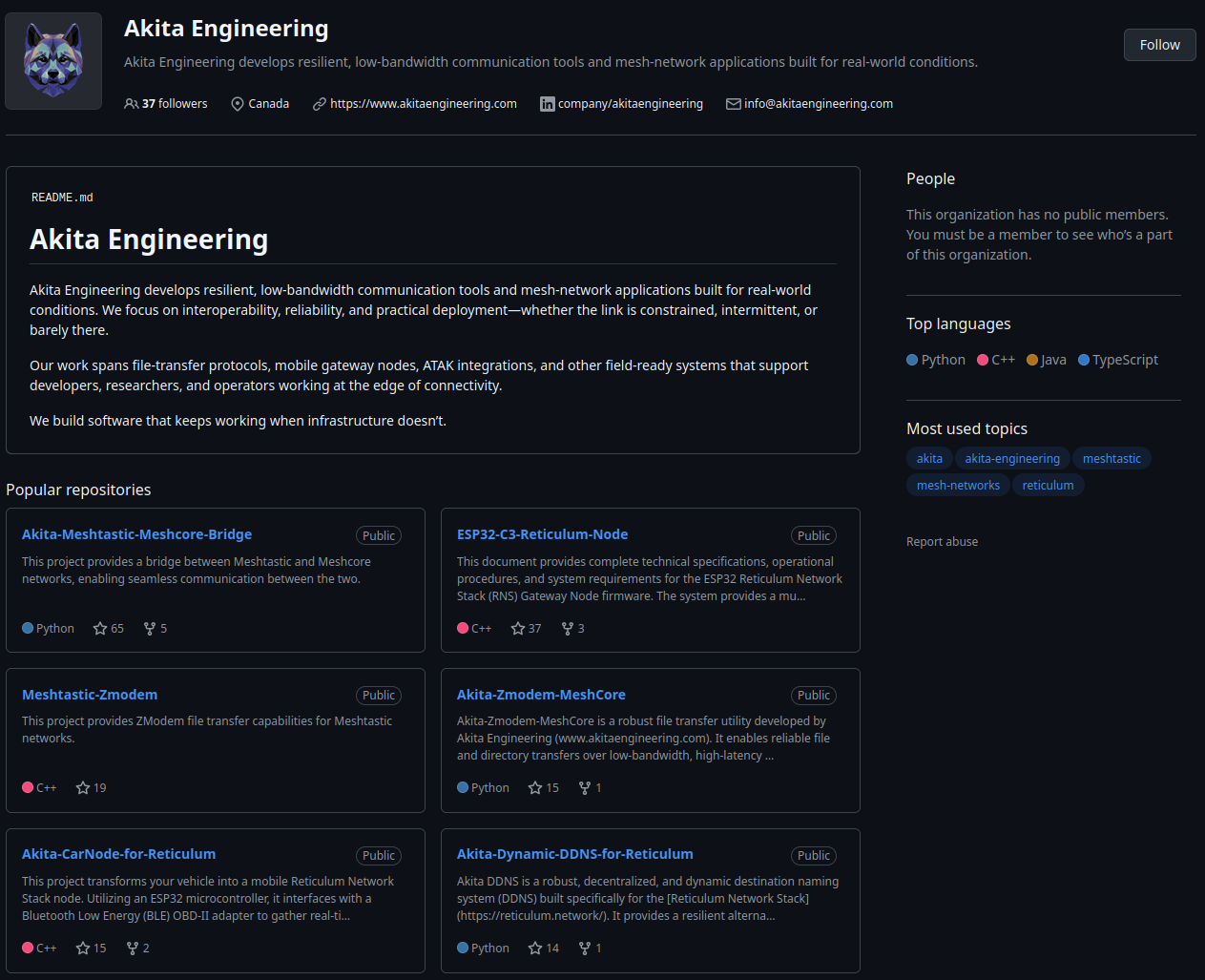
They seem to have solved some quite impressive tasks, such as adding DDNS to the Reticulum Network Stack and running RNS on an ESP32-C3. The README.md files are extensive with details on everything from configuring Wi-Fi credentials, to setting up unit tests.
Something smells fishy...
These technologies were at a glance so impressive that it caught the attention of the Reticulum community. A discussion thread was started and very quickly it became clear that the code was nothing more that non-functional code generated by GenAI.
The first signs of something being wrong were the inconsistent (and completely wrong) imports of the Reticulum python library:

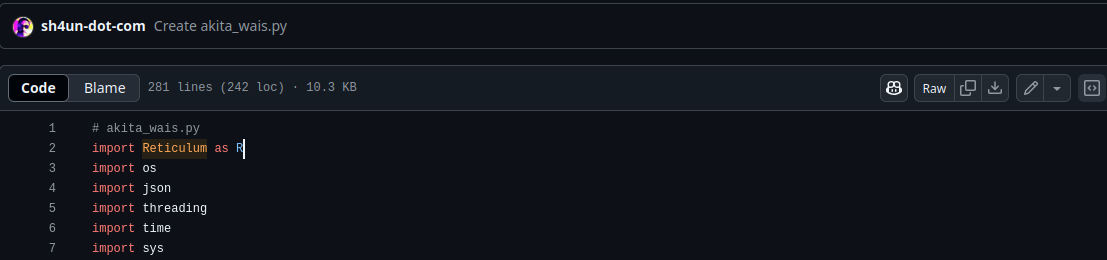
Had they looked at the first code example for using the network stack, then they would have found the correct way to import the library:
##########################################################
# This RNS example demonstrates a minimal setup, that    #
# will start up the Reticulum Network Stack, generate a  #
# new destination, and let the user send an announce.    #
##########################################################

import argparse
import sys
import RNS

# Let's define an app name. We'll use this for all
# destinations we create. Since this basic example
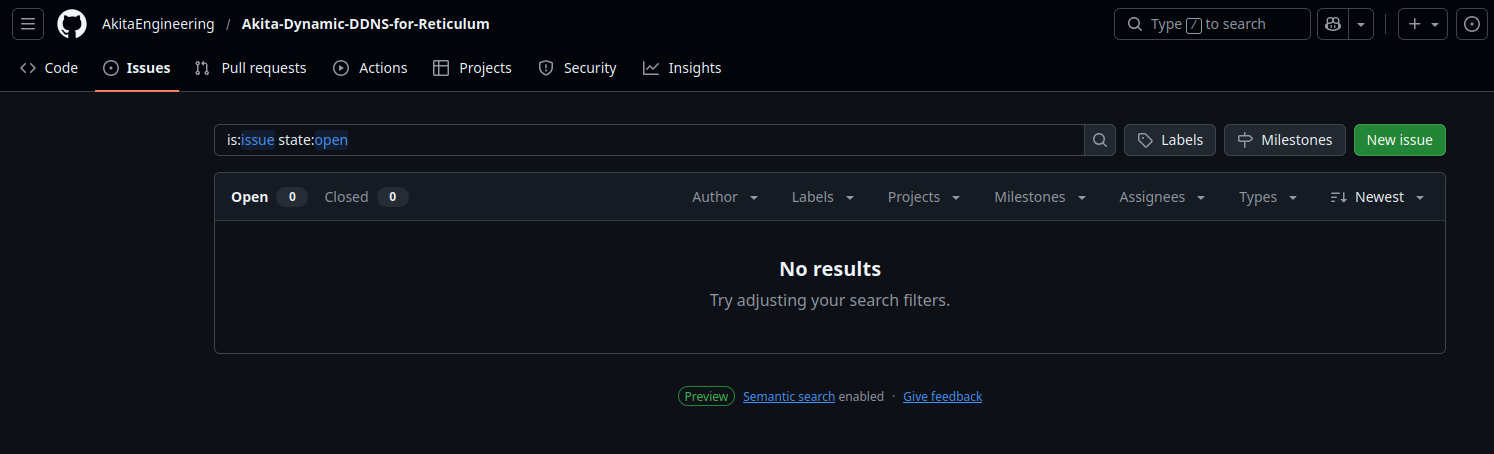
I myself took part in a Github issue alerting to the fact that the repository contained fake code, only to see the issue be deleted by the owners.
Wasting time...
The DDNS code is not the only suspicious codebase. The repos under the AkitaEngineering group have over 100 stars on GitHub, meaning that more users have taken their time to test some of the code. An issue on their ESP32-C3-Reticulum-Node repository shows this in action. A user tried to run the code, an notices that the repository is making use of Bluetooth Classic for the ESP32-C3, something the MCU does not support.
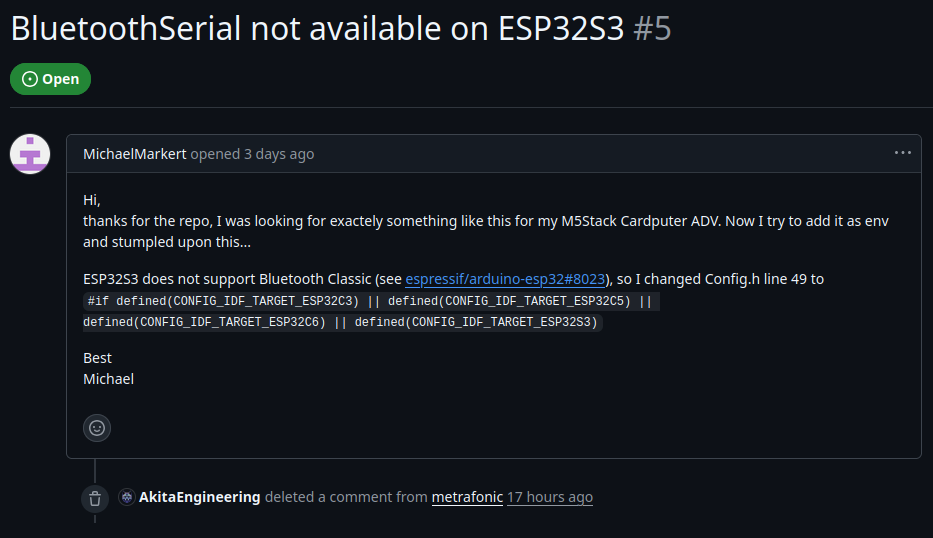
As you can see in the screenshot, a comment alerting to the fact that the repo has fake code was deleted. New users will have no idea that the code is AI generated and not functional, wasting their time too.
Looking at the issues of other repos like the Akita-Meshtastic-Meshcore-Bridge we see users complaining about non-functional code. The user @sh4un-dot-com apologies, says he has fixed the code, and closes the issue, with no commit references at all. I have yet to see a real user confirm that they have gotten any of the code from Akita Engineering to run properly.
What now
Akita Engineering will continue to produce code for their GitHub. Some of it may work, some of it may not. My personal opinion is that it is very suspicious that they are taking their time to appear like a legitimate engineering company, with a website targeting enterprise and government engineering solutions. See for yourself at https://akitaengineering.com
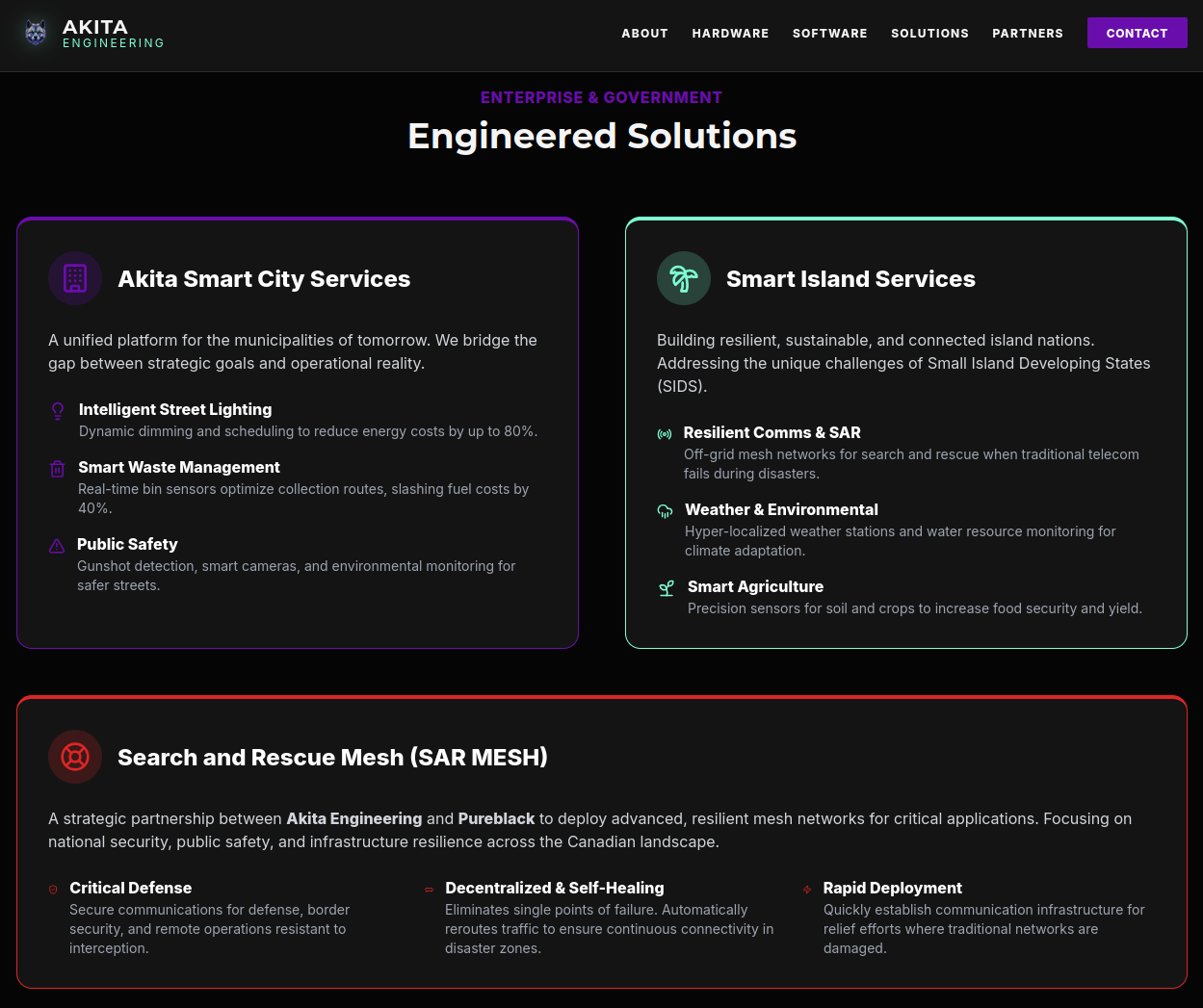
They have also made an effort to appear as a company in the "Made in Canada Directory":


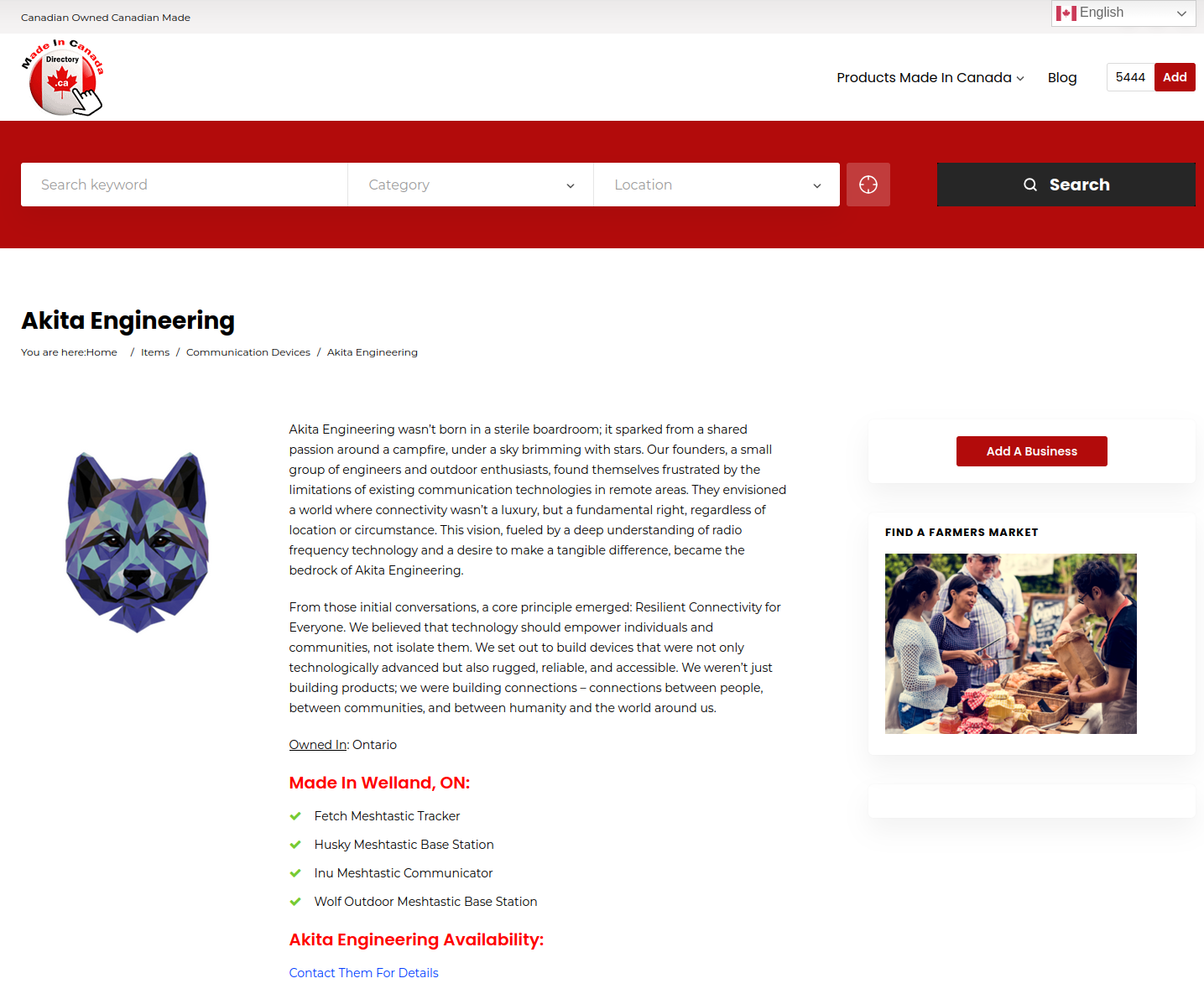
I have no problem with people creating their own business and making use of new technologies, but for me this seems like a fishy operation. I can only assume that AkitaEngineering has contributed to the frustration of developers like Mark Qvist (creator of Reticulum).